
The M-CARE Project has officially launched in Murang’a County, Kenya, marking an important milestone in efforts to strengthen integrated care for non-communicable diseases (NCDs) and mental health conditions in Africa.
The inception meeting brought together representatives from the Kenya Ministry of Health, Murang’a County Government, the African Population and Health Research Center (APHRC), Amsterdam UMC, University of Ghana, Lira University, and other M-CARE consortium partners, alongside healthcare professionals, researchers and key national and county stakeholders.
The launch created an important platform to discuss how M-CARE can support the integration of cardiometabolic and mental health services within primary healthcare and align implementation with existing national and county health priorities.
Bringing care together under one roof
A central focus of M-CARE is addressing the fragmentation of care experienced by people living with multiple chronic conditions. Patients with conditions such as hypertension, diabetes, depression and anxiety may currently have to visit different clinics or providers to receive the care they need.
Through M-CARE, the project seeks to develop and evaluate a more integrated model in which patients can be screened, assessed and managed for multiple physical and mental health conditions during the same healthcare visit.
Speaking during the launch, Dr Gershim Asiki, Senior Research Scientist at APHRC and Kenya Principal Investigator for M-CARE, highlighted how patients frequently present with more than one condition, yet some conditions—particularly mental health problems—may remain undetected when services are delivered separately.
The M-CARE approach will therefore include strengthening healthcare worker capacity, improving diagnostic processes, supporting the use of electronic health records and clinical decision-support systems, and strengthening access to appropriate medicines and essential diagnostic equipment.
Strong support from Kenya’s health authorities
The launch received strong engagement from both national and county health authorities.
Dr Mercy Karanja, Head of the Division of Mental Health at Kenya’s Ministry of Health, emphasised the importance of integrating mental health screening into routine NCD services. She noted that such integration could help identify patients whose mental health conditions might otherwise remain undiagnosed and untreated.
The approach also aligns with broader Ministry of Health efforts to bring mental healthcare closer to communities and improve the management of people living with chronic conditions.
At the county level, Dr James Mburu, Murang’a County Director for Health, reaffirmed the county’s commitment to supporting the initiative. Murang’a County has made investments in health infrastructure, digital health systems, medicines and health technologies, creating an enabling environment for implementation of the project.
M-CARE is expected to be implemented across a substantial number of health facilities in Murang’a County, providing an important opportunity to assess how integrated care can work within routine healthcare settings.
Co-creating the model with stakeholders
The inception meeting went beyond introducing the project. Participants took part in stakeholder discussions and co-creation sessions aimed at identifying priorities, clarifying roles and responsibilities, and agreeing on practical next steps for implementation.
Perspectives from the Ministry of Health’s mental health and NCD teams, Murang’a County health officials, researchers and implementing partners helped ensure that the proposed model responds to the realities of Kenya’s healthcare system and the needs of patients and healthcare workers.
This collaborative approach is central to M-CARE. Rather than introducing a stand-alone intervention, the project aims to work with existing health systems, healthcare workers, policymakers and communities to develop approaches that are feasible, sustainable and scalable.
A collaborative African and international partnership
Professor Charles Agyemang of Amsterdam UMC highlighted the potential of integrated care to make healthcare easier to access for people living with multiple conditions, particularly those in rural and lower-income settings where repeated visits to different clinics can create additional financial and transportation burdens.
The Kenya launch also reflects the broader collaborative nature of M-CARE. The project brings together expertise from institutions across Africa and Europe, including Amsterdam UMC, Vrije Universiteit Amsterdam, University of Copenhagen, London School of Economics and Political Science, University of Ghana, African Population and Health Research Center, and Lira University, working alongside national and local health authorities.
The launch in Murang’a represents an important step towards demonstrating how cardiometabolic and mental health services can be brought together within primary healthcare.
By strengthening healthcare worker capacity, diagnostic services, digital health systems and coordinated patient management, M-CARE aims to generate evidence on models of integrated care that can be adapted and scaled within Kenya and other African settings.
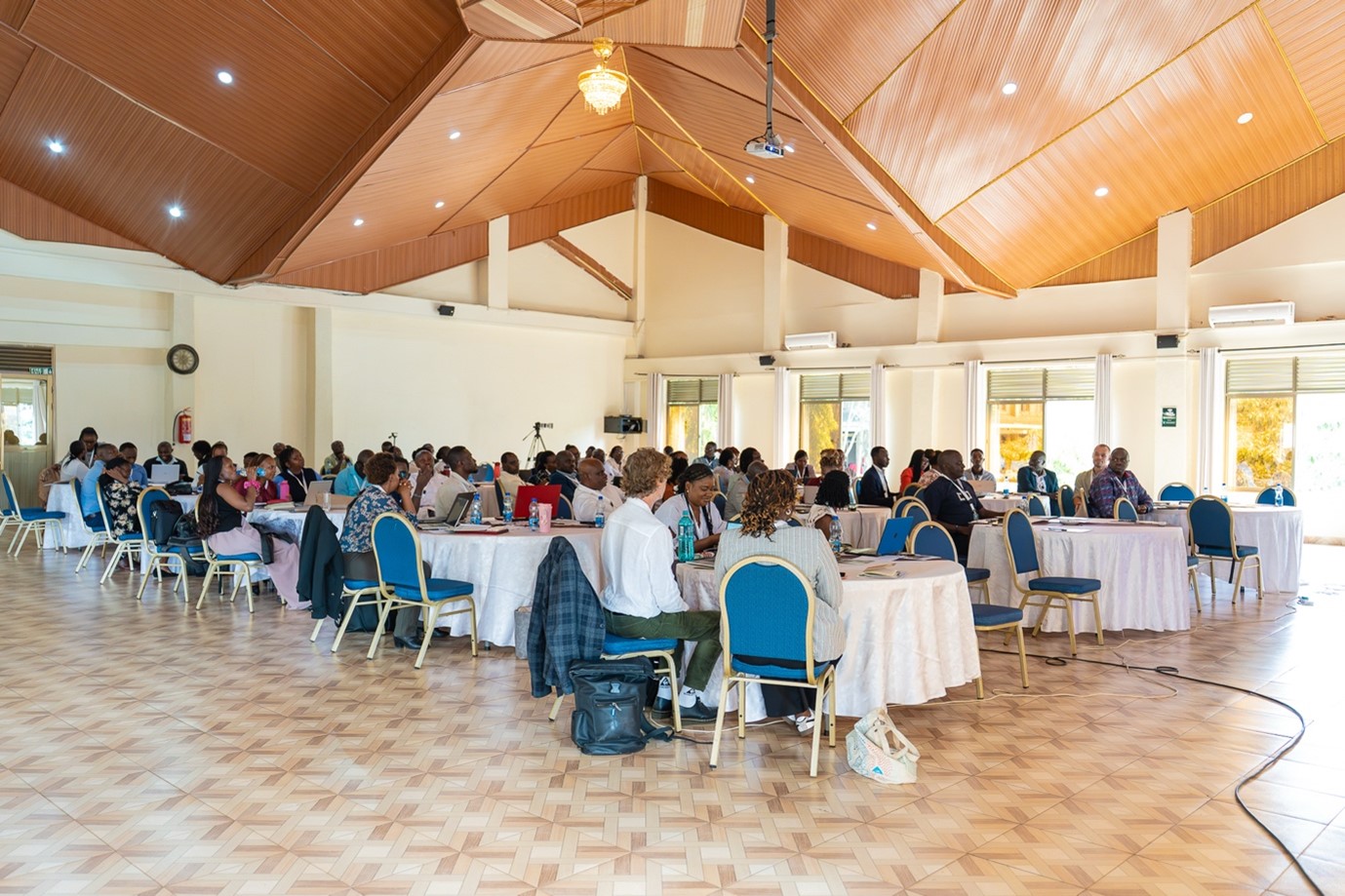 Inception Meeting in Murang’a, Kenya