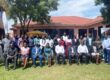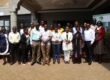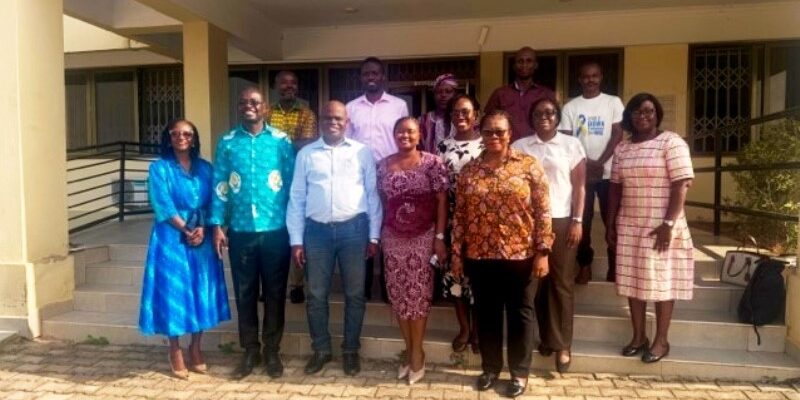
The meeting was held on 23 January 2026 at the Regional Health Directorate in Kintampo. It commenced with introductions between members of the M-CARE project team from Accra Prof. Alfred Doku, Dr. Leonard Baatiema, Dr. Solomon Nyame, Dr. Gordon Amoh, Dr. Tee Massah, Ms. Marilyn Azumah, and Dr. Pearl Aovare and representatives from the Kintampo Health Research Centre and the Bono East Regional Health Directorate. Participants from the Regional Health Directorate were led by Dr. Paulina, alongside the Regional Director and seven additional staff members.
Mr. Solomon Nyame opened the meeting by outlining its objectives, after which Prof. Alfred Doku delivered a comprehensive presentation on the M-CARE research project. His presentation covered the project background, consortium partners, methodology, and implementation strategy. Prof. Doku emphasized the importance of strong collaboration and highlighted the project’s central aim of testing a one-stop service delivery model for the management of non-communicable diseases (NCDs), noting its potential for scale-up within Ghana and in other comparable settings.
A welcome address was delivered by Dr. Paulina, who expressed the Bono East Region’s readiness to participate in the project and underscored the importance of close collaboration with the M-CARE team. She highlighted the current lack of integrated, one-stop services for NCDs and cancers in the region, noting that patients often cannot access comprehensive care within a single facility. She expressed optimism that the M-CARE initiative would help address these service gaps and improve health outcomes. Prof. Doku supported these remarks, emphasizing that NCDs are interconnected and require an interdisciplinary, team-based approach delivered closer to communities, rather than reliance on fragmented referral pathways. He further noted that the project would align with existing national guidelines and complement ongoing health system strengthening efforts.
Concerns regarding the project timeline were raised by Mr. Nyiru, following which further clarification was provided by Dr. Leonard Baatiema and Ms. Pearl Aovare. Ms. Pearl Aovare highlighted the leadership role under Work Package 7, as well as the contributions of the other Work Packages, explaining their relevance to the team and the overall project. She further requested the support of the Regional Health Directorate in mapping and identifying appropriate health facilities for project implementation at their earliest convenience.
Discussions subsequently focused on facility mapping and sampling. It was noted that the Bono East Region currently has approximately 59 eligible B1 and B2 facilities without specialist services, including health centres, polyclinics, and district hospitals, which is below the 70 facilities required for the study. Dr. Paulina indicated the Directorate’s preference for selecting all participating facilities from within the Bono East Region where feasible.
The importance of establishing a clearly defined control group was emphasized by Mr. Nyiru, who noted that poorly defined controls often limit the policy relevance of research findings. Prof. Doku concurred, stressing that a robust control group is essential for assessing the clinical significance and effectiveness of the proposed interventions. Dr. Paulina and Mr. Solomon expressed enthusiasm for the project and reiterated their support for a strong and methodologically sound study design.
Further discussions underscored the need to strengthen NCD research and data availability in Ghana, noting that NCD data should be as accessible and routinely available as data for malaria, tuberculosis, and HIV/AIDS. Mr. Solomon shared insights from his fieldwork with the Kintampo Health Research Centre, explaining that many NCD patients are referred to distant facilities and are often lost to follow-up due to transportation challenges, contributing to high morbidity and mortality even after diagnosis. He emphasized the importance of decentralized, community-level one-stop NCD services.
Concerns were also raised by the Regional Health Directorate regarding the possibility that some facilities or staff might feel excluded from training and project activities. In response, it was agreed that an Implementation Team would be established to meet quarterly, while broader stakeholder meetings would be held biannually for reporting, feedback, and review.
The meeting concluded with expressions of appreciation from both the M-CARE and Regional Health Directorate teams and a shared commitment to continued collaboration aimed at improving NCD care delivery and health outcomes in the Bono East Region.
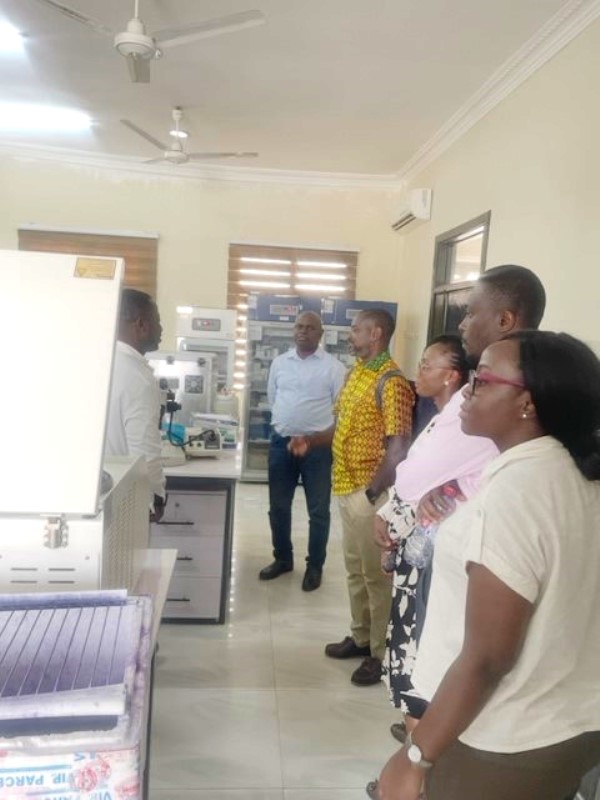
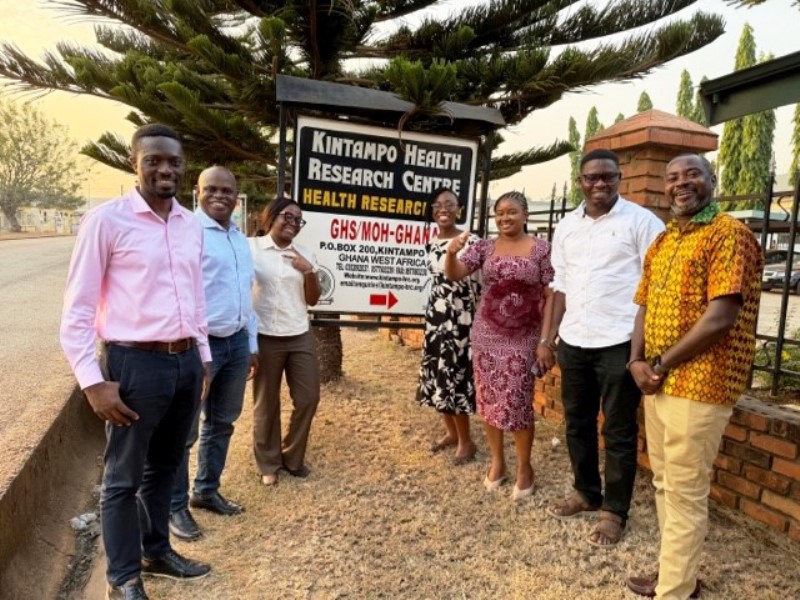
Additional photographs from our visit to the Kintampo Health Research Centre.